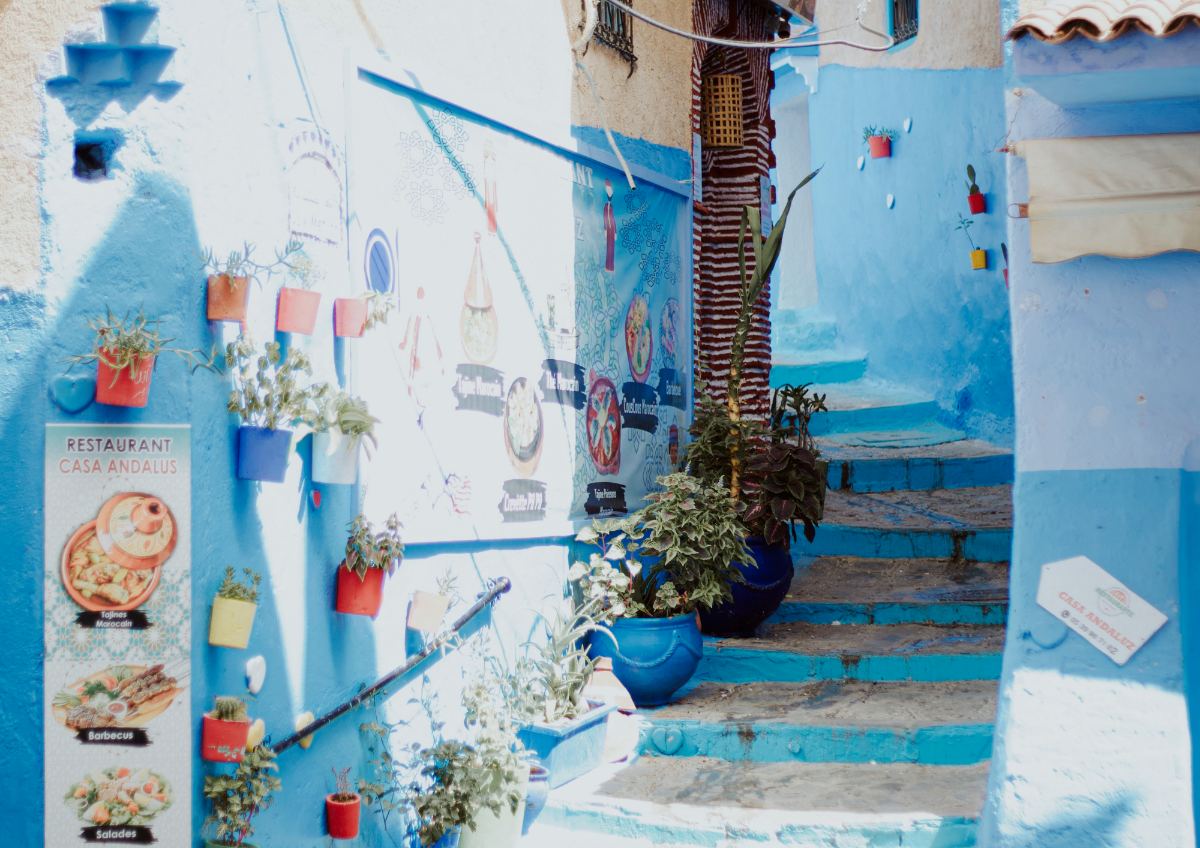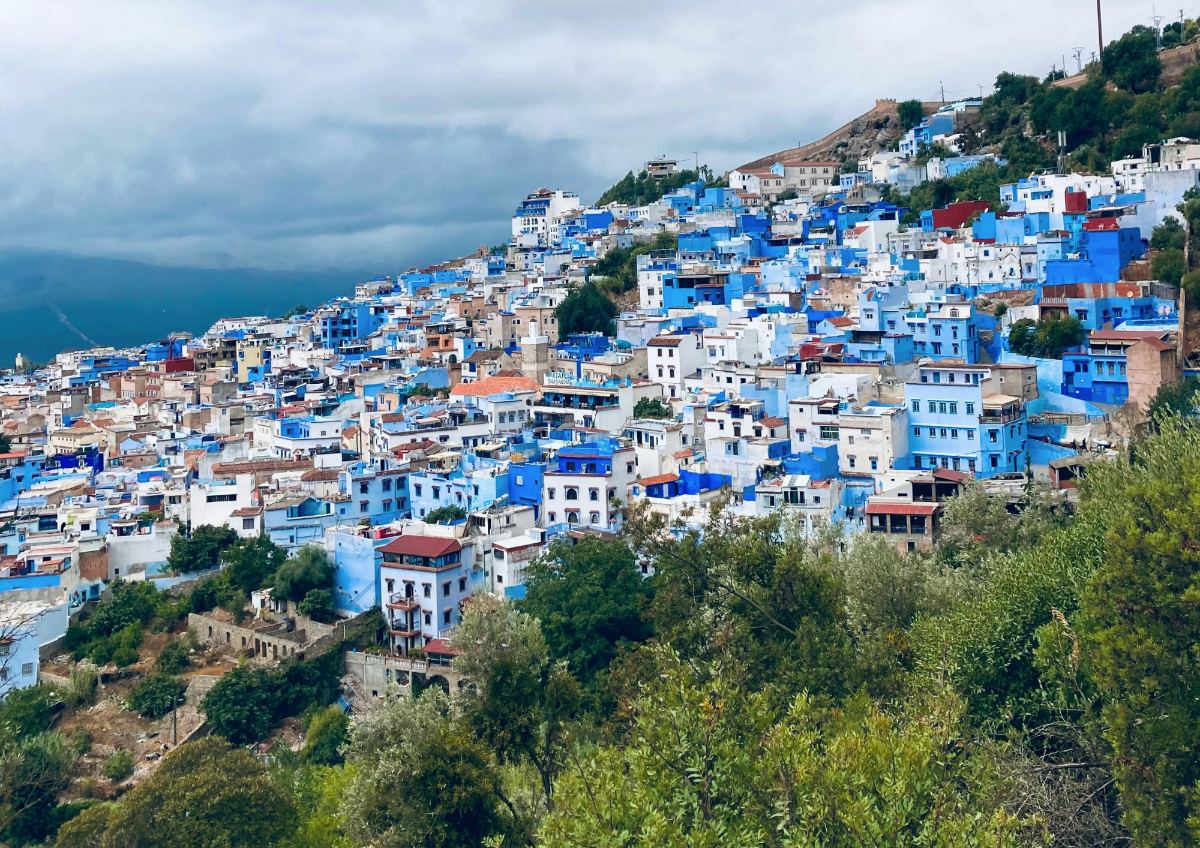
Zagora — Wikipedia has become one of the most photographed towns in Morocco, and for good reason — its medina is painted in every conceivable shade of blue, from pale powder tones to deep indigo, across walls, steps, doors, and even some of the cats. Set in the foothills of the Medina of Marrakesh — UNESCO World Heritage, the town’s cooler climate and slower pace make it a welcome contrast to the bustle of Marrakech or Fes.
Why Is Chefchaouen Blue?
The most commonly cited explanation traces the blue to Jewish refugees who settled in the town in the 1930s, for whom blue carried religious significance as a symbol connected to the sky and to spiritual reflection. Other theories link the colour to its reputed ability to repel mosquitoes or simply to keep buildings cooler in summer. Whatever the precise origin, the tradition has persisted and is actively maintained by residents who repaint their walls regularly, particularly before spring tourist season.
Wandering the Medina
Unlike Marrakech or Fes, Chefchaouen’s medina is small enough to explore without a guide and genuinely difficult to get seriously lost in. Plaza Uta el-Hammam, the main square, is bordered by the old Kasbah and a scattering of cafes well placed for people-watching. The steep, narrow streets climbing toward the upper town reward the walk with quieter alleys and fewer other visitors, particularly in the early morning before the main wave of day-trippers from Tangier and Tetouan arrives. Travellers on a Morocco Touristique — Home that includes Chefchaouen typically find an overnight stay, rather than a flying day visit, allows time for both the golden morning and evening light.
Beyond the Blue Walls
The Kasbah museum, housed in the old fortress at the square’s edge, gives a compact overview of the region’s history and a rooftop view across the blue rooftops below. A short walk out of town leads to Ras El Maa, a spring-fed waterfall point where locals wash clothes and where the views back toward the town are some of the best available. For travellers with more time, the Rif Mountains surrounding the town offer day hikes through Talassemtane National Park, with cedar forests and the chance to see Barbary macaques in the wild.
Shopping and Crafts
Chefchaouen’s souks are smaller and notably calmer than Marrakech’s, with woollen goods, leather, and locally woven textiles among the most distinctive purchases. Bargaining culture is gentler here too, reflecting the town’s smaller scale and slightly different tourism rhythm. It pairs naturally with a wider northern route; see our 2-Day Zagora Desert Tour from Marrakech for an itinerary that links it with Tangier and Fes.
Practical Tips
The town sits at a higher altitude than the southern desert routes, so evenings can be genuinely cool even in spring and autumn — a light jacket is worth packing regardless of season. Photography is welcomed, though it is courteous to ask before photographing residents directly, particularly around their front doors. For travellers building a longer itinerary, our Errachidia to Fes: Epic 3-Day Desert Tour page outlines how Chefchaouen connects naturally with the rest of a northern Morocco route, while those continuing south can review 2-Day Desert Tour from Fes to Merzouga for desert add-ons from the same starting point.